

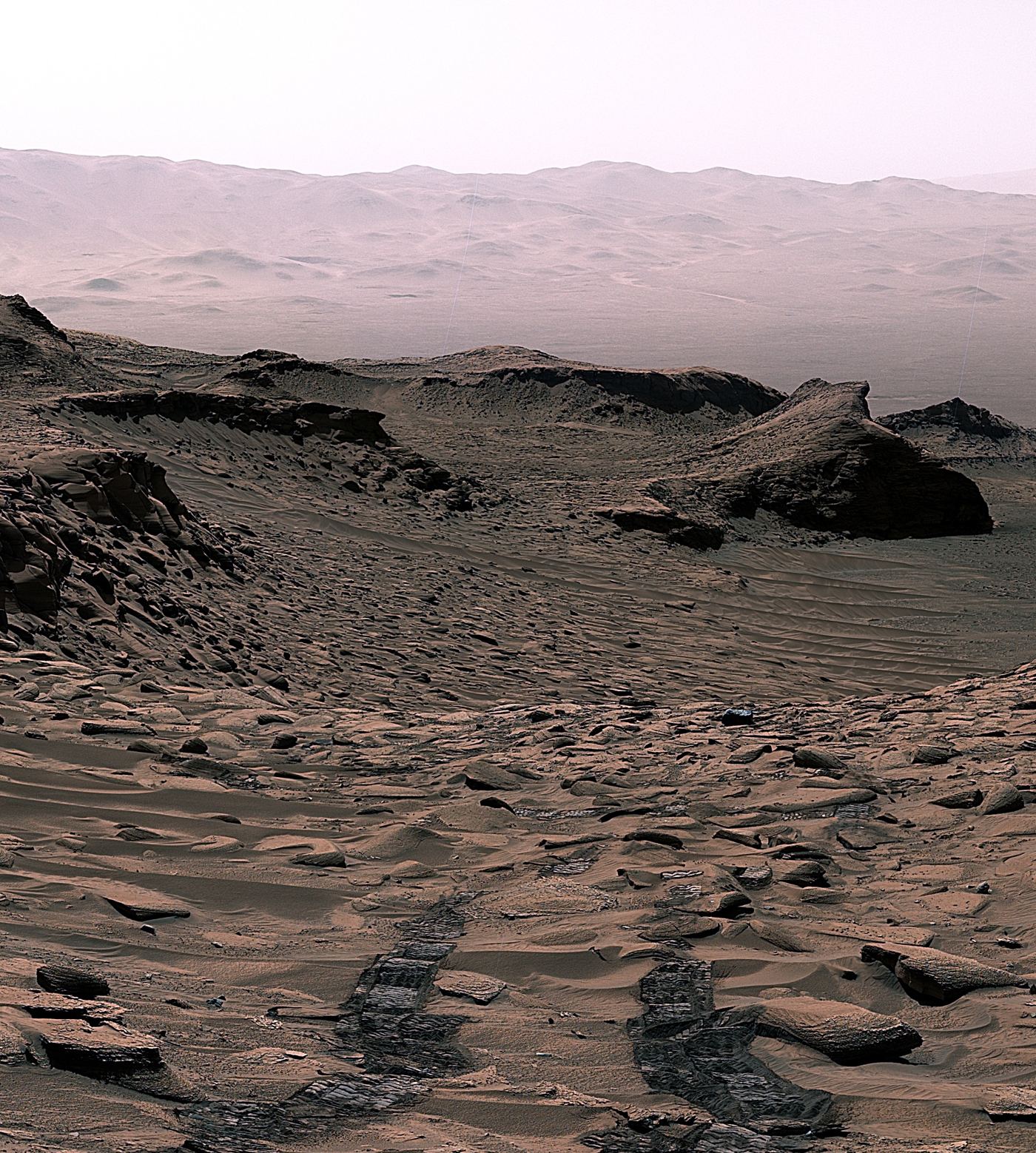
The ancient highlands of Mars preserve widespread clay deposits that formed when liquid water lingered in lakes and shallow basins billions of years ago. Orbiting spectrometers detect the chemical fingerprints of these clays across crater floors and eroded plateaus, each detection marking a place where water once altered volcanic rock over long periods. Clays matter to scientists because on Earth they form in relatively gentle conditions and they protect organic material by binding it between mineral layers. That makes Martian clay fields prime targets in the search for evidence of past habitability. New mapping combines spectral data with high resolution images, revealing shorelines, layered sediments and channels that fed the vanished lakes. Some deposits sit inside craters that once held deep water, while others spread across open terrain suggesting regional groundwater systems. The variety indicates that early Mars was not wet in one single way, but hosted many local water environments that appeared and disappeared as climate shifted. Dating the surfaces around the clays helps researchers place the wet era within the planet history. Each refined map also guides the selection of landing sites where a future mission could sample several water formed minerals within driving distance.
What the Evidence Shows
Laboratory analysis of Martian meteorites and Earth analogues helps interpret what the orbiters see, because clay chemistry records the temperature and acidity of the water that created it. Mild, neutral waters leave different minerals than hot acidic springs, and the highland record leans toward conditions that would not immediately destroy organic compounds. Researchers are also examining how later dry centuries buried, exposed and sometimes altered the clays again, complicating the story written in the rocks. Wind erosion, usually seen as destructive, here acts as an archivist assistant, stripping away younger material to reveal ancient lakebeds. Sample return ambitions increasingly focus on clay bearing terrain, since bringing such material to Earth laboratories would settle questions no remote instrument can answer. Mission designers must weigh scientific richness against landing safety, because the most interesting ancient terrain is often rough. International teams share maps openly so competing mission proposals build on the same evidence base. Public interest follows the water story naturally, yet scientists stress the careful chain from mineral detection to claims about ancient environments. The clays do not announce life, they announce opportunity, places where the ingredients and conditions for life once genuinely overlapped. Reporting and analysis from sources such as NASA track the same developments, and specialists following Martian highland clay deposits say the direction is now consistent across independent lines of evidence.
The Wider Context
Funding bodies are watching Martian highland clay deposits closely because the work sits at the junction of basic curiosity and practical return. Grant panels increasingly ask for a path from discovery to application, while researchers push back that the most valuable uses of fundamental science are rarely the ones written into the original proposal. The tension is productive when both sides stay honest about timescales.
What Happens Next
The long view on Martian highland clay deposits is that fields advance by accumulation rather than by single announcements. This result adds a solid, checkable piece to a structure many teams are building, and its authors have shared their data so the piece can be tested from every side. That is how the picture eventually becomes reliable enough to act on. You can follow related developments in our coverage of science.
It is also worth remembering how quickly the picture in this area has changed before. Positions that looked settled a few years ago have been revised as new data arrived, and the same humility is appropriate now. The strongest coverage of this subject, and the most useful advice, tends to come from sources that update their views openly when the facts move, rather than defending an earlier position long after it has stopped fitting the evidence available.
