

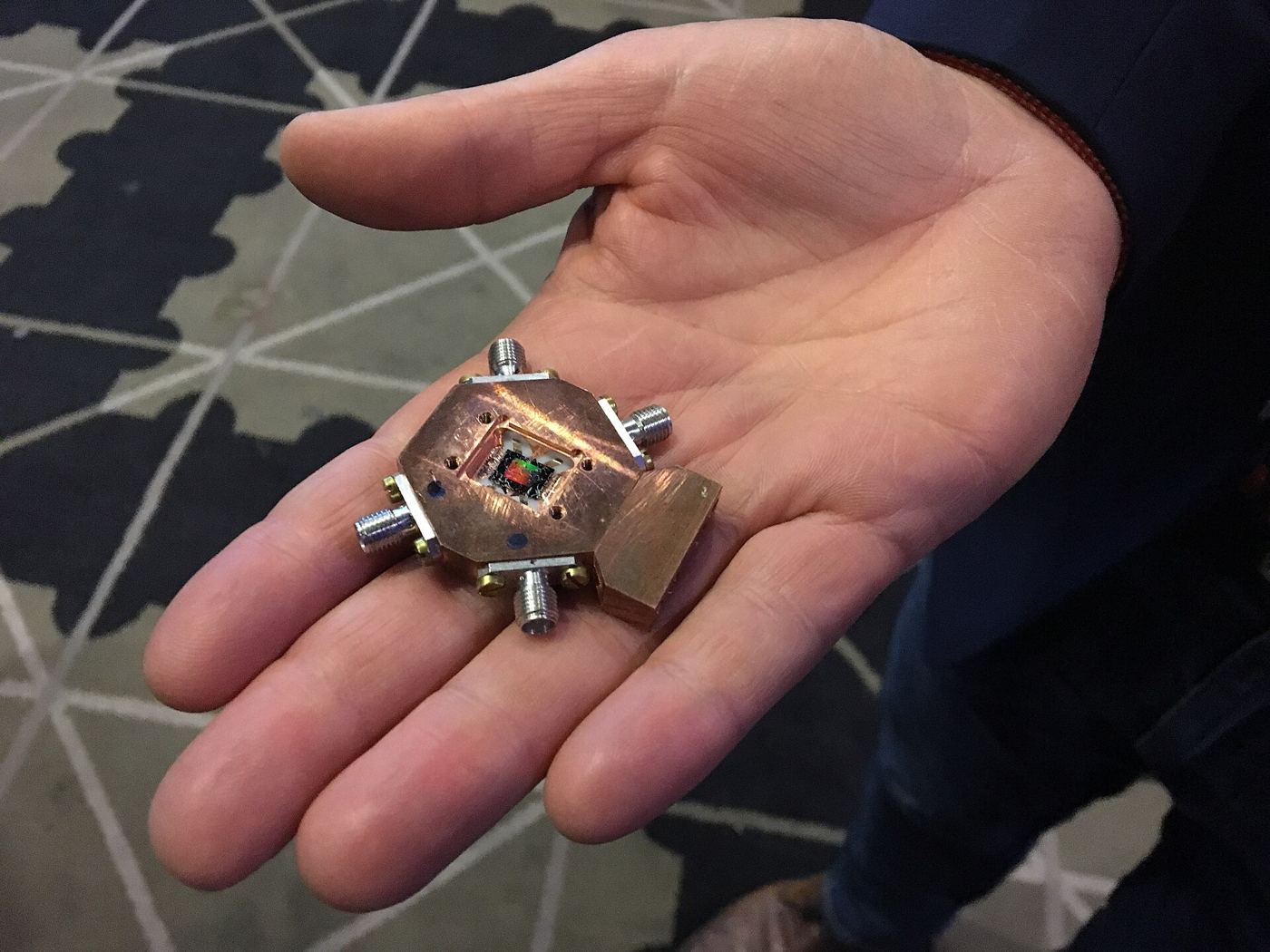
Quantum computers promise to solve problems no ordinary computer can touch, from designing new medicines to modelling complex materials, but they have always had a fatal flaw: they make mistakes constantly. The delicate quantum states that carry information are easily disturbed by heat, vibration and stray electromagnetic noise, so errors pile up faster than calculations can finish. In 2026 that picture finally began to change. Google’s Willow chip, a 105-qubit processor announced in December 2024, showed for the first time on real hardware that adding more physical qubits to an error-correction code makes the encoded information more reliable, not less. As the team scaled its surface code from distance three to five to seven, the logical error rate fell each time, and the resulting logical qubit lived 2.4 times longer than the best individual physical qubit in the system. It was the first proof that the theory of error correction works as promised in practice.
What the Evidence Shows
Other teams have built on the result. IBM announced its 120-qubit Nighthawk processor in November 2025, targeting a commercially useful quantum advantage by the end of 2026, and Quantinuum, working with Microsoft, demonstrated twelve logical qubits with error rates far below those of the physical hardware. Serious players now point to roughly 2029 for the first useful fault-tolerant machines, with broad commercial value later still. The caveats matter: no current system is fault-tolerant at useful scale, the logical error rates achieved so far are still far too high to run the algorithms that could break today’s encryption, and security planners still put that risk, known as Q-Day, around 2033 to 2035. What has changed is the direction of travel. For the first time, the field is measured by reliability rather than raw qubit counts, and the road to a useful quantum computer finally looks like engineering rather than hope. That shift is why 2026 is remembered as the year the field grew up. Reporting and analysis from sources such as Wired track the same developments, and specialists following quantum error correction 2026 say the direction is now consistent across independent lines of evidence.
The Wider Context
The wider context is an industry learning to ship capability and restraint together. Products built around quantum error correction 2026 now launch with safety evaluations, usage data and rollback plans as standard, because enterprise buyers and regulators ask for them in the first meeting. Companies that treated those questions as friction are discovering they have become the purchase criteria.
What Happens Next
What happens next for quantum error correction 2026 depends less on another breakthrough than on the unglamorous work of reliability, pricing and support. The buyers evaluating it now are not enthusiasts; they are operators with budgets and auditors, and their checklists will decide the timeline. On the evidence of the current pilots, the technology has earned the right to be judged by them. You can follow related developments in our coverage of technology.
None of this will be settled by a single announcement, study or product launch. The pattern to watch is accumulation: independent confirmations, honest reporting of failures and steady improvement in the underlying numbers. Readers who follow those signals, rather than the loudest claim of the week, will understand this subject better than most of the commentary surrounding it suggests is possible.
