

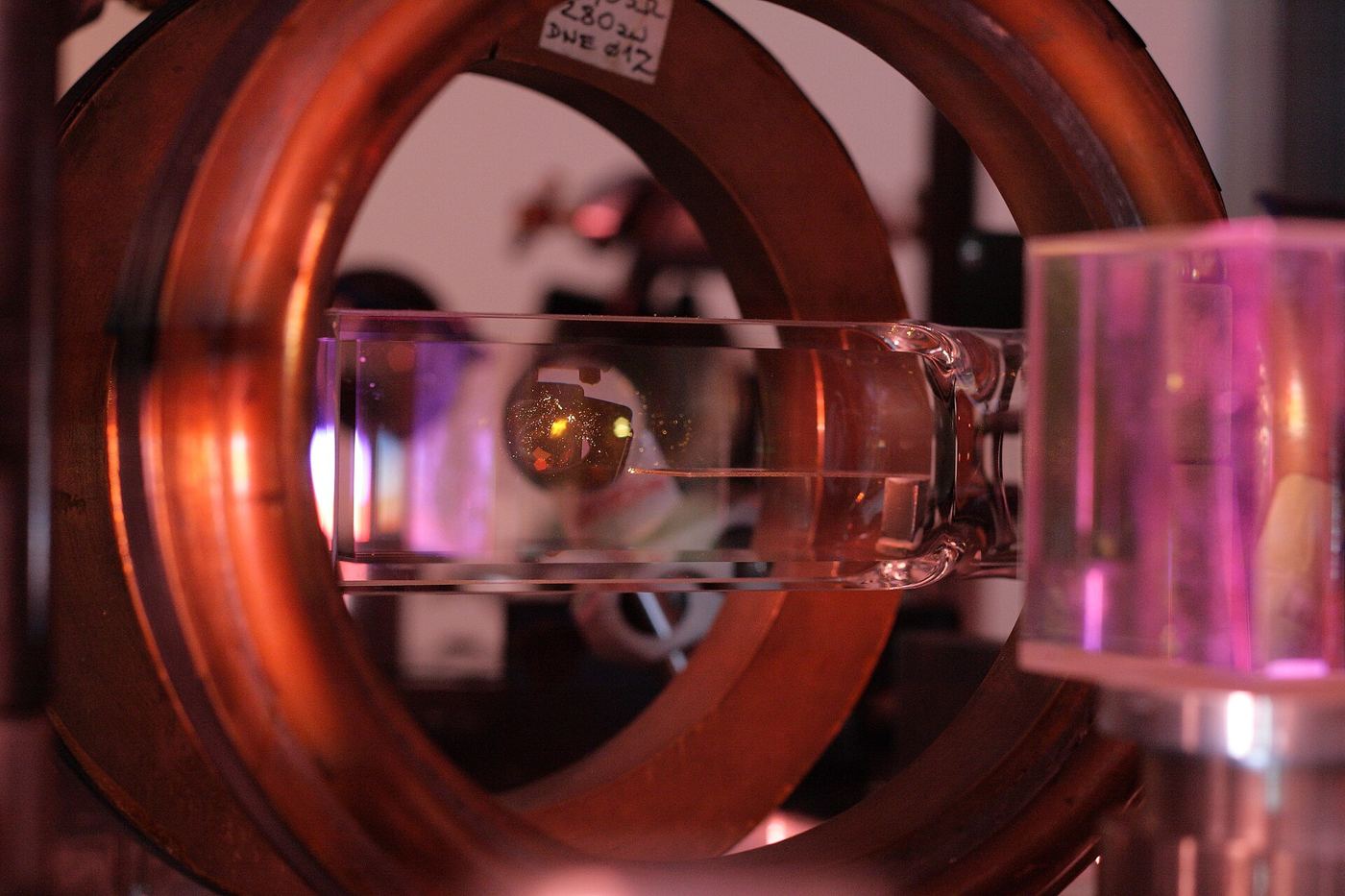
Quantum entanglement is one of the strangest features of physics. When two particles are entangled, measuring one instantly reveals something about the other, even if they are far apart, in a way that has no everyday equivalent. Physicists have spent decades testing this effect in laboratories, and they are now stretching it across real cities, linking entangled particles through kilometres of optical fibre and even through the open air. The goal is a quantum network, in which entangled particles are shared between distant locations and used for communication that cannot be intercepted without detection. Recent experiments have entangled particles across tens of kilometres of city fibre, and others have connected laboratories in different parts of a city through the air. Each demonstration is a step toward a network that could one day link quantum computers and carry messages with a level of security no ordinary system can match. The tests have confirmed the effect again and again, even when the particles are separated by kilometres of fibre.
What the Evidence Shows
The engineering is demanding. Entangled particles are fragile, and the fibre that carries them absorbs light and disturbs the delicate state, so the signal weakens quickly with distance. Physicists are building devices called quantum repeaters, which refresh the entanglement along the route without ever reading the information it carries. Progress is steady but slow, and a city-wide quantum network remains years away. Critics note that the practical uses are still limited, and that the technology must prove itself against far cheaper conventional encryption. Supporters argue that the work is worth doing because it tests the foundations of physics at a new scale and because secure communication will only become more valuable. Researchers say the city experiments have already taught them a great deal, and that each kilometre added makes the next one easier. Reporting and analysis from sources such as NASA track the same developments, and specialists following the city-spanning quantum entanglement say the direction is now consistent across independent lines of evidence.
The Wider Context
Funding bodies are watching the city-spanning quantum entanglement closely because the work sits at the junction of basic curiosity and practical return. Grant panels increasingly ask for a path from discovery to application, while researchers push back that the most valuable uses of fundamental science are rarely the ones written into the original proposal. The tension is productive when both sides stay honest about timescales.
What Happens Next
The long view on the city-spanning quantum entanglement is that fields advance by accumulation rather than by single announcements. This result adds a solid, checkable piece to a structure many teams are building, and its authors have shared their data so the piece can be tested from every side. That is how the picture eventually becomes reliable enough to act on. You can follow related developments in our coverage of science.
It is also worth remembering how quickly the picture in this area has changed before. Positions that looked settled a few years ago have been revised as new data arrived, and the same humility is appropriate now. The strongest coverage of this subject, and the most useful advice, tends to come from sources that update their views openly when the facts move, rather than defending an earlier position long after it has stopped fitting the evidence available.
